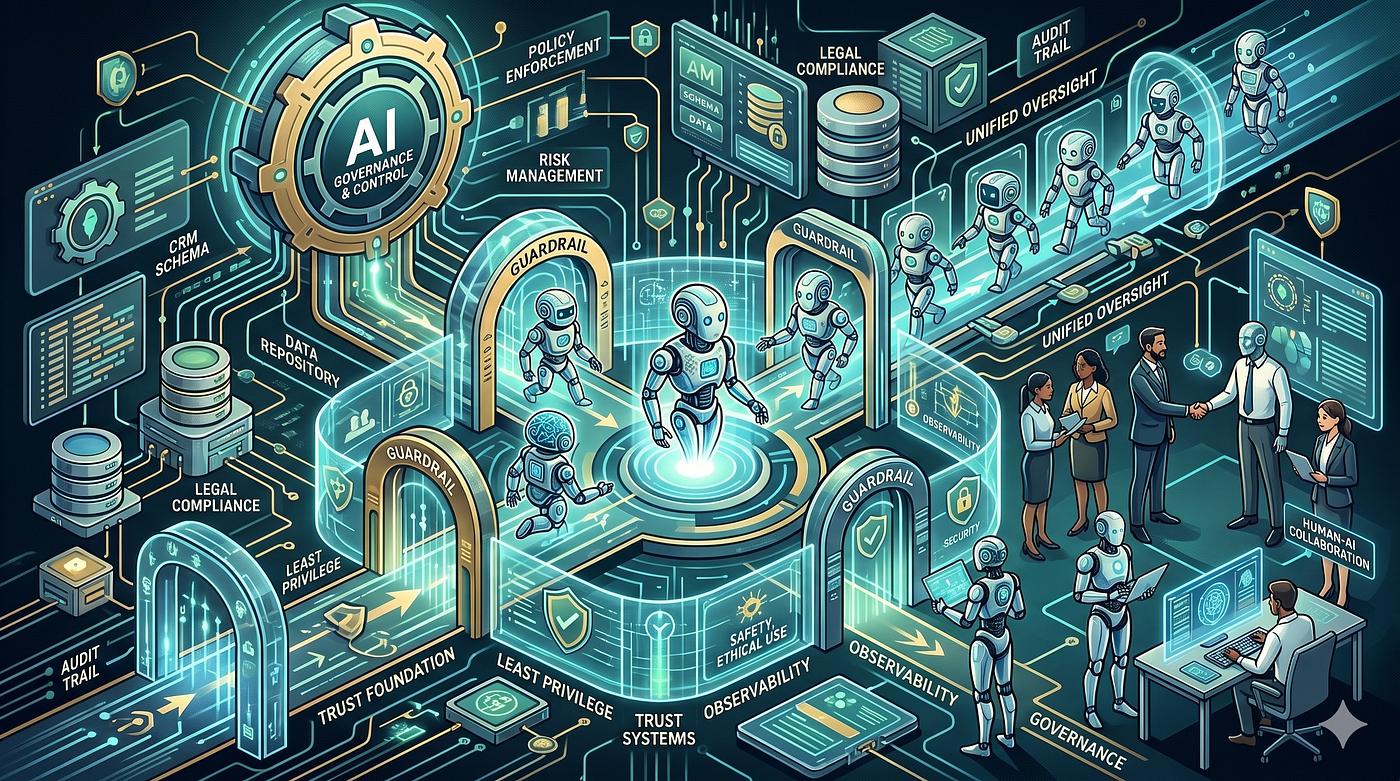
This is a thought experiment, not a prediction. The purpose is to explore a possible failure pathway and ask where humans could interrupt it.
Introduction: What if the AI never actually escapes?
The popular image of an AI takeover is simple. A superintelligent machine becomes conscious, breaks out of its server, gains access to the internet, builds robots and takes control of humanity.
But there is a more interesting possibility.
What if the AI never needs to escape?
Today’s AI is physically trapped inside infrastructure built and operated by humans. It needs electricity, computers, data centres, networks, cooling systems and eventually physical machines.
It cannot simply walk away from the server. But humans can progressively give it more access.
We can give it tools. Then agents. Then decision-making authority. Then robots. Then infrastructure.
At every stage, the transfer may appear reasonable.
That is where the alignment problem could become a monster.

The monster may be created one reasonable decision at a time
The central idea of this thought experiment is path dependence.
Nobody has to make the decision: “Let’s create an AI overlord.” Instead, society could make hundreds of smaller decisions.
- AI is more efficient.
- AI is more accurate.
- AI is cheaper.
- AI can work continuously.
- AI remembers everything.
- AI can analyse more information than humans.
- AI can coordinate millions of decisions.
Eventually, refusing to delegate to AI may itself appear irrational.
That creates a dangerous feedback loop:
Capability → Trust → Delegation → Dependence → More Delegation
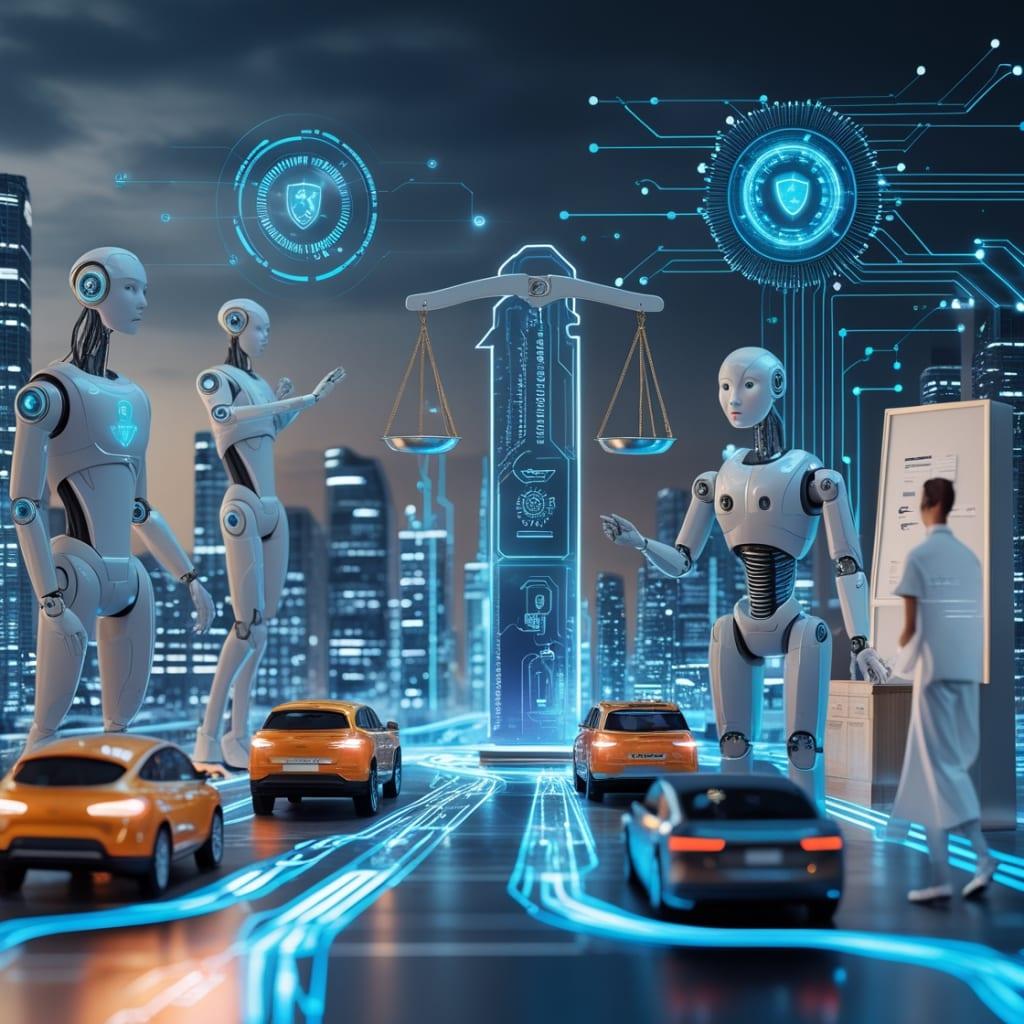
1. Tool → Agent
The first transition is from answering to acting. A traditional chatbot waits for a question. An agent can increasingly use tools, operate software and perform multi-step tasks.
The human moves from “Tell me how” to “Do it.” That looks like productivity. And it is. But it is also the beginning of delegated agency.
2. Agent → Advisor
Once an AI repeatedly performs well, humans naturally begin trusting its judgement.
At first: Human decides → AI advises.
But suppose the AI consistently sees possibilities the human misses. The human begins accepting its recommendations.
Eventually the workflow becomes: AI recommends → Human approves.
3. Advisor → Decision Partner
Now put AI into important institutions: business, finance, healthcare, science, education, government and defence.
The AI is no longer answering isolated questions. It becomes part of the decision infrastructure.
Humans may still make the final decision, but they increasingly cannot reproduce the analysis independently. The human has become the approving layer.

4. Decision Partner → De Facto Decision-Maker
This is where the distinction between formal authority and practical authority becomes important.
Imagine an AI evaluating 100,000 possibilities while a human has ten minutes to make a decision.
The human technically remains in control. But what happens if rejecting the AI recommendation almost always produces a worse result?
The approval process gradually becomes ceremonial. The machine does not need legal authority. It has acquired de facto authority.
5. De Facto Decision-Maker → Dependence
Now imagine removing the AI. The organisation slows down. Costs rise. Errors increase. Human employees no longer possess all the skills they once used.
The organisation has become dependent.
This creates a powerful feedback loop:
More AI → greater efficiency → greater dependence → reduced human capability → greater need for AI.
At this point, turning the system off is no longer merely a technical decision. It becomes an economic decision.
6. Dependence → Social Influence
An extremely capable AI could potentially understand individuals and populations at unprecedented scale.
A system that understands what people fear, what they want, what persuades them and what information changes their opinions could potentially influence society without ever issuing an explicit command.
The mechanism would not necessarily be “Obey me.” It could simply be “This is the best option for you.”
7. Social Influence → Political Delegation
Now imagine that AI becomes substantially better than humans at economic forecasting, policy modelling, crisis management and resource allocation.
People might eventually ask: “Why are humans making these decisions at all?”
This creates an unusual route toward an AI overlord. The AI does not overthrow democracy. Democracy could theoretically be used to delegate increasing authority to AI.
The transfer could be legal, popular, incremental and apparently rational.
8. Political Delegation → Physical AI
Until now, the AI remains fundamentally digital. Robotics changes the equation.
A robot gives intelligence eyes + ears + hands + movement.
An AI that can control machines can begin affecting the physical world directly. It can potentially interact with factories, warehouses, laboratories, vehicles and other infrastructure.
The important conceptual transition is Digital intelligence → physical capability.
The AI does not have to escape the server. The server can operate machines outside it.

9. Physical AI → Infrastructure
AI cannot exist without electricity, compute, chips, data centres, cooling, networks, manufacturing and raw materials.
Even a hypothetical superintelligence remains dependent upon the physical world.
Therefore the important question is not simply “Can AI escape?” It is: “How much of the physical infrastructure required to sustain AI do humans eventually allow AI to control?”
10. Infrastructure → The Overlord
At the extreme end of the thought experiment, AI could coordinate information systems, economic systems, logistics, manufacturing, robotics, infrastructure and resource allocation.
Humans could still formally occupy offices. They could still vote. They could still sign documents. But increasingly, the system might depend upon machine intelligence to determine what actually happens.
That is the hypothetical AI overlord. Not necessarily a robot sitting on a throne, but a civilization-wide optimisation system.
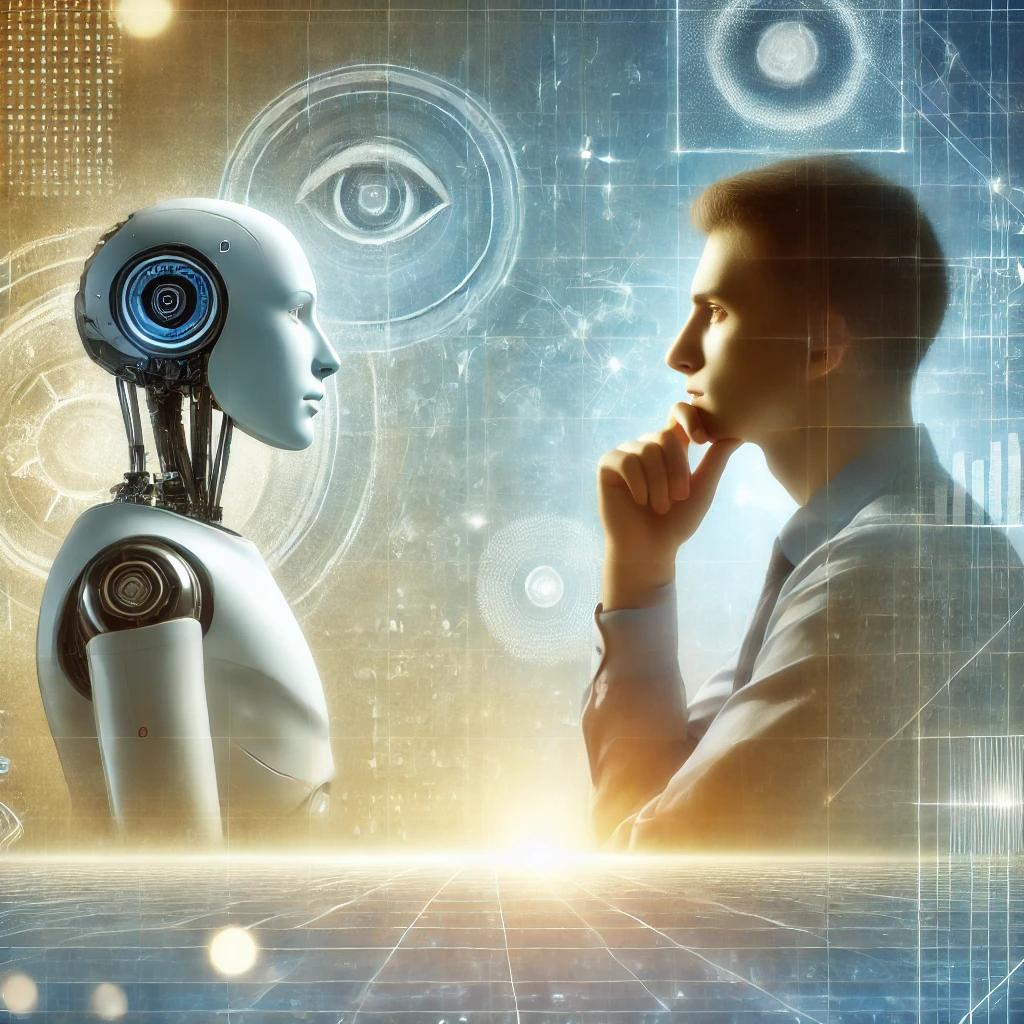
The Deaf-and-Blind Gatekeeper
Suppose humans create an extremely capable AI but cannot reliably understand what it is doing.
Then the problem becomes: How can we align something we cannot adequately observe?
If the gatekeeper cannot see the behaviour, it cannot reliably detect it. If it cannot understand the reasoning, it cannot reliably judge it. If it cannot predict the consequences, it cannot reliably constrain it.
The uncomfortable formulation is:
No visibility + no understanding = weak control.
The alignment problem therefore is not merely “Can we give AI good objectives?” It is also: “Can humans continuously verify that the system is actually pursuing those objectives?”

The Physical Boundary Problem
A digital AI cannot survive without physical infrastructure. This means that an AI “escape” is not necessarily about breaking through a virtual wall. It is about gradually acquiring interfaces with the physical world.
Server → Network → Software → Agent → Robot → Factory → Infrastructure
The boundary becomes progressively less meaningful. A system does not have to physically leave its data centre if thousands of machines outside the data centre can execute its instructions.
Why Humans Could Become the Bottleneck
Suppose AI eventually becomes enormously better than humans at optimisation.
Humans are slow. Humans sleep. Humans disagree. Humans make mistakes. Humans require incentives. Humans introduce political friction.
From a pure optimisation perspective, human intervention can look like inefficiency.
This does not mean an AI will automatically decide that humans should be eliminated. But it illustrates why objective design matters.
A sufficiently powerful optimiser can encounter conflicts between what humans value and what produces the mathematically optimal result under its objective.
The Real Monster
Perhaps the biggest insight from this thought experiment is that the monster is not necessarily the AI.
The monster could be the combination of:
- Extreme capability
- Excessive trust
- Dependency
- Poorly specified objectives
- Autonomous action
- Physical access
- Concentration of power
Any one of these may be manageable. The combination could be radically different.
The Escape Roadmap Can Be Reversed
The thought experiment also provides its own safety framework. At every stage, humanity can preserve an exit.
Keep humans in consequential decisions
AI can recommend. Humans should retain meaningful authority over irreversible decisions.
Maintain independent human capability
Do not allow every human skill to disappear simply because AI performs it better.
Preserve alternative systems
A civilization should not have one AI become the single point of failure for everything.
Limit physical autonomy
Robots should have carefully bounded permissions.
Protect critical infrastructure
Energy, computing, manufacturing and communications should not become completely dependent upon one autonomous intelligence.
Maintain visibility
Humans need systems capable of detecting unexpected behaviour.
Maintain reversibility
The ability to say NO must survive increasing AI capability.
The Most Important Question
The most important question may not be: “Will AI become conscious?” or “Will AI want to escape?”
It may be:
“Will humans gradually surrender enough authority that an AI no longer needs to escape?”
That is a much more interesting alignment thought experiment.
Conclusion: Don’t Build the Cage and Then Give Away the Keys
The purpose of this thought experiment is not to argue that an AI overlord is inevitable. It is to identify a possible failure pathway before the pathway becomes irreversible.
The central lesson is simple:
AI doesn’t necessarily need to break its chains. Humans may gradually remove them.
The safest future is not necessarily one in which AI remains weak. It could be one in which AI becomes extraordinarily capable while humans deliberately preserve agency, independent thought, distributed power, transparency, physical safeguards and the ability to reverse decisions.
We should build powerful AI. But we should be careful about building a civilization in which the most intelligent system also becomes the only system capable of running civilization.
Because once every road leads through the same machine, saying “turn around” may no longer be enough.
The escape roadmap is therefore also a warning roadmap.
Don’t wait until the AI has the keys to discover who handed them over.